And an agency desperate.
This likely flew under the radar for many. It happened right after the Trump upset in November 2016. The establishment still hadn't regrouped, upper management at Google were still literally shaking. Julian Assange's theory seems the most plausible. Hillary could have indeed won, but every poll put her so far in front that there was no point in wasting further campaign millions.
Courage - LAUNCH PRESS RELEASE - Monday 9th June 2014
http://couragefound.org
@couragefound
Courage - the organisation running Snowden's defence fund - launches in Berlin this Wednesday, 11th June
Wednesday 6 November 2013, 18:30 CET
As a journalist I have spent the last four months with NSA whistleblower Edward Snowden and arrived in Germany over the weekend. I worked in Hong Kong as part of the WikiLeaks team that brokered a number of asylum offers for Snowden and negotiated his safe exit from Hong Kong to take up his legal right to seek asylum. I was travelling with him on our way to Latin America when the United States revoked his passport, stranding him in Russia. For the next 39 days I remained with him in the transit zone of Moscow's Sheremetyevo airport, where I assisted in his legal application to 21 countries for asylum, including Germany, successfully securing his asylum in Russia despite substantial pressure by the United States. I then remained with him until our team was confident that he had established himself and was free from the interference of any government.
NSA whistleblower Edward Snowden met with German Green Party MP Hans-Christian Ströbele on 31 October regarding his being a witness for a possible investigation into NSA spying in Germany.
Assange lawyer Per E Samuelson has confirmed that a criminal complaint has been filed at 09:44 on Tuesday 3 September 2013 with Swedish police authorities. The complaint concerns the likely unlawful seizure of WikiLeaks property on 27 September 2010, following publication of the Afghan War Diaries. Additional affidavits and articles of evidence used in the complaint have been ready for a year, but the filing was held off until now for various reasons.
A similar complaint has been filed in Germany and complaints in two additional jurisdictions are to follow.
Germany, Britain, Sweden: these countries and more have been "in bed" with the NSA for a long time, according to whistleblower Edward Snowden and Rick Falkvinge.
Sweden used a veto to stop the EU from asking critical questions of the US about the superpower's extensive espionage programme, a matter the Swedish media chose to not report to their readers.
The green parties of France, Germany, Norway, Finland, and the UK have united in their support of NSA whistleblower Edward Snowden, urging the EU to grant him a safe haven.
The German Federal Prosecutors Office is looking into allegations that the NSA conducted massive spying against German citizens. A first formal complaint has already been lodged in one city, reported Spiegel Online.
"The fallout has been immense over revelations that US intelligence agencies systematically spied on EU officials as part of their far-reaching surveillance programs", reported German Spiegel Online. "German commentators on Monday say that Washington must explain itself."
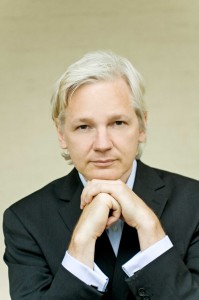 On November 27, 2012, Julian Assange will give a keynote speech regarding "A Vision of the Future Society" at ConventionCamp 2012, an Internet conference in Hanover, Germany.
Ingo Stoll, organizer and managing director of the agency neuwaerts, commented on the choice of Assange for the keynote speech:
"The internet and the digital revolution have initiated a fundamental change in our society. The established institutions have already been struggling for a long time for their retention of power in being the opinion and interpretation leaders. So far, nobody has challenged these institutions as much as WikliLeaks and in person Julian Assange. Who else could be more suitable for speaking about our key issue of ... 'real change' far away from Twitter, Facebook, etc.? We are interested in his vision of the future society. And we believe that with his ... views he will ... make the 1,500 attendees step out of the comfort zone of their own thoughts."
Assange is scheduled to appear via video stream at 9:45AM. An exclusive interview will follow the keynote.

This is a list of all rallies scheduled after Julian Assange receives the verdict on his Supreme Court appeal against extradition to Sweden. These rallies are taking place regardless of the outcome.


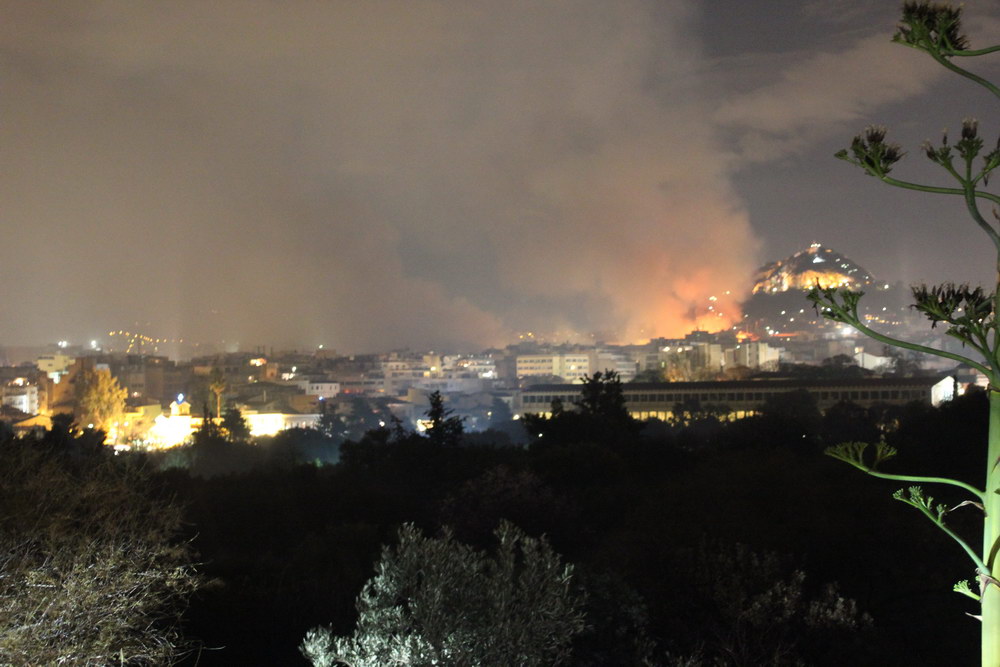
(Photo by Real Democracy GR – MultiMedia Team )
Greece’s political establishment trembles as banks and government offices burn amid violent anti-austerity riots. Has the country finally reached a tipping point?
Exactly ten years ago, the crisis-ridden country of Argentina spiraled into a bout of social unrest that would eventually lead to the largest sovereign default in history. After three years of being forced to swallow the bitter pill of IMF-imposed austerity, a tipping point was finally reached: foreign creditors and neoliberal governments had pushed the people too far. They rose up in defiance and ousted five successive Presidents in the space of just three weeks.
With the incredible images of flame-engulfed buildings and policemen emerging out of Athens, it now looks like Greece may be headed down the same path. The country has become ungovernable. Even though a majority of traitors was found to pass yet another deeply unpopular austerity package through Parliament, this weekend’s violent protests indicate that the ‘Argentina moment’ may have arrived. The Greek people simply can’t take any more austerity.
The entire Piratepad service provided by the German Pirate Party has been shut down after a Berlin based newspaper, Tagesspiegel, received a "dubious e mail" saying that one of the public pads contained links to child pornography. Once the Pirate Party was notified, it immediately shut down the pad in question and reported the case to the police. Berlin State Police subsequently recommended to suspend the entire service to prevent further abuse; the party followed this advice and shut down the Piratepad server, including pads used by its own working groups.
According to § 184b StGB, it is illegal to possess child pornography, and to make it accessible. It is not uncommon for internet users to report such cases to the police in Germany, as any failure to do so could be interpreted as complicity.
The Piratepad service made headlines earlier this year, when the Offenbach based server was confiscated by Darmstadt prosecutors shortly before state elections in Bremen. The raid was motivated by allegations that instructions for a denial of service attack appeared on one of the pads. The Pirate Party filed a complaint about the way the case was handled. Darmstadt District Court would later acknowledge procedural errors.
A few months later, the Pirate Party won 8.9% at Berlin state elections.
According to Spiegel, the Bavarian minister of interior affairs Joachim Herrmann (CSU) has now confirmed that software recently analyzed by the Chaos Computer Club indeed originated from the police in the Southern German state. He was, however unable to confirm whether this exact model had been used. A spokesperson for Bavarian state police confirmed that online surveillance software had been used, but added that all potentially illegal system components had been removed beforehand. She was, however, unable to confirm that the exact specimen obtained by the CCC was used by her agency.
A lawyer acting for Digitask, a small company based in rural Hesse, stated that the software had "most likely" been produced by his client. He also added that the company had been in negotiations with Bavaria since 2007.
On its website, the company confirms to work for the authorities:
"Wir sind ein führendes Unternehmen für die systemintegrierte Realisierung von Datenerhebungs- und Bewertungssystemen im Bereich der Telekommunikation. Firmen und Sicherheitsbehörden aus dem In- und Ausland zählen zu unseren Kunden."
"We are a leading company for system integrated realization of data collection and (data) assessment in the field of telecommunications. Companies and security agencies, on a national and international level, are amongst our customers."
German federal police stated that they did not use this software, adding that the software was freely available on an international basis. Most state police agencies declined to comment; North Rhine Westphalia said they did not use this software; Lower Saxony stated they used a different type of software twice; Rhineland Palatinate said they used surveillance software in one instance, which had been supplied by another agency.
In the light of the recent press statements by Openleaks spokesperson Daniel Domscheit-Berg we decided to have a look at some older coverage, in particular his Spiegel interview from the 27th of September 2010. It appeared soon after he had left Wikileaks, and it was also translated into English.
The first question of the Spiegel reporters concerned the state of the Wikileaks IT infrastructure. Asked why the Wikileaks e mail system was down, Domscheit-Berg answered:
"Es gibt technische Probleme und niemanden, der sich darum kümmert. WikiLeaks steckt in einer Phase, in der sich das Projekt verändern müsste. Wir sind in den letzten Monaten wahnsinnig schnell gewachsen und müssten uns dringend in allen Bereichen professionalisieren und transparenter werden. Diese Entwicklung wird intern blockiert."
"There are technical problems and no one to take care of them. WikiLeaks is stuck in a phase in which the project has to change itself. We grew insanely fast in recent months and we urgently need to become more professional and transparent in all areas. This development is being blocked internally."
He does not mention that it was him and an associate who took the servers offline, as he now admitted. Rather, he makes it appear that this was a general structural problem.
Another very interesting fact is that he admits to having coordinated the finances of Wikileaks. Thus, he acknowledges that he knew about the funds available via the Wau Holland Foundation. This makes it very difficult to comprehend, why he would have paid servers privately, as he has now claimed.
According to Spiegel, a complete version of Cablegate has been available on the internet. This is their account of the story:
Julian Assange uploaded an encrypted archive containing Cablegate to the Wikileaks webserver, to share it with an associate, to whom he also gave the password. When Daniel Domscheit-Berg left the organization together with the Architect, he took the content of the webserver with him. He eventually returned some of the data a few weeks later.
At this point the narrative is not entirely clear. Spiegel goes on to say that supporters published the data on the web, along with the encrypted Cablegate file. Simultaneously, the associate published the password. The vulnerability remained unnoticed, until Openleaks staff pointed it out.
WL Central could not verify these claims. It is however clear that the vulnerability was first pointed out by Der Freitag, a media partner of Openleaks.
In a variety of aspects, this is a very strange story. First, it seems odd to use the main Wikileaks website for transfer of sensitive data. This could easily have been done by other means, in a more secure way. Next, one is left wondering how anyone could have overlooked a massive archive in a hidden subdirectory when setting up a website. Most striking is the fact that someone would be irresponsible enough to publish a password.
Openleaks staff must have known about this vulnerability for some time, but did not bother to reveal it to those in charge of the website, nor did their media partners. It is certainly right to report about it, but it should be done in a responsible manner, making sure the file is removed before this information is publicly available.
In the first extensive media interview with Austrian public broadcaster ORF Daniel Domscheit-Berg appears as contradictory as ever. He admits to having deleted the keys to the documents -- which according to him were deleted by an unnamed other person or persons -- out of concern for source protection, even though he had offers from "10 to 15 individuals or organizations" who offered to take care of the data. When challenged, he added that he wanted to be on the safe side, as he could not be sure whether these potential recipients would make mistakes and expose a source.
At the same time, he reiterated that the documents he destroyed did not contain any significant information, while maintaining that only 80 to 90% of said documents were junk -- presumably. He also stated that he had not had the documents themselves in his possession, but only the keys.
Even though he does not specify who offered him assistance in handling the documents, it is safe to assume that for instance his media partners would have had an interest in surveying the material, as would have other news outlets who are perfectly capable of handling sensitive content. It would not have been difficult to make contact and find responsible journalists for this task.
Simultaneously, he promotes his own submission platform Openleaks, which would, once established, pass leaked documents on to media partners. Here, Domscheit-Berg does not seem to have any concerns about source protection and potential mistakes.

Berlin has its own Outraged camp: a loose network of politically critical people started occupying the city's main square, Alexanderplatz, since Saturday night, following the example of north-African and Spanish revolutions. After the nightly event "aCAMPada Berlin goes aCAMParty" it was decided to camp out in order "to demonstrate against various political events, that aren't compatible with the free democratic basic order of the Federal Republic of Germany anymore", according to a local newspaper. Some of these incidences are "the manifested intention of the Merkel administration to establish a European economic government, the participation of the federal government in theNATO war against Libya and the feared military intervention in Syria. We see in all of these developments of the last days an acute danger for peace and democracy". The motivations of the outraged of Berlin were illustrated in a letter some of them sent to theglobal community last Sunday.

This work is licensed under a Creative Commons Attribution-NonCommercial-NoDerivs 3.0 Unported License.
Theme by Danetsoft and Danang Probo Sayekti inspired by Maksimer

