
On July 10 and 11, WL Central's Alexa O'Brien moderated a conversation between Göran Rudling, former witness for the defense at the February extradition hearing for Julian Assange, and Peter Kemp, WL Central legal commentator and Australian solicitor.
Göran Rudling is a Swedish citizen and author of, "Sex, lies, no videotape and more lies. False accusations in the Assange case" in which he deconstructs the case against Julian Assange. Mr. Kemp has translated and made commentary on Mr. Rudling's article from its original Swedish.
Mr. Rudling has also recently written "Weird accusation or proof of lies? More about the Assange case", which covers some of the contents of our 2 hour discussion.
Total running time is about 2 hours. There is image degradation the first 30 seconds of Part 2 and 3. Sound quality is of lesser quality comparatively on Parts 2, 3, and 4 only.
2010-11-18 Letter from Swedish Counsel Björn Hurtig to English co-Counsel for Julian Assange
2010-11-18 The Persecution of Julian Assange, Continued
2010-11-18 The Persecution of Julian Assange: Reactions
2010-11-18 Press release by counsel for Julian Assange
2010-11-18 Statement by Julian Assange's counsel Mark Stephens
2010-11-18 WikiLeaks staff editorial: Why our editor-in-chief is busy and needs to be defended
2010-11-19 Julian Assange to appeal Swedish arrest ruling
2010-11-20 The Persecution of Julian Assange: Reactions, Part 2
2010-11-20 Updates in Swedish case
2010-11-21 RSN Petition in Support of Julian Assange
2010-11-22 Further updates in Swedish case
2010-11-24 Updates in Sweden Appeal Case
2010-11-30 Updates in Sweden case
2010-11-30 Updates in Sweden case: Supreme Court appeal, Interpol notice
2010-12-01 Steven Aftergood: Assange prosecution would be "extremely dangerous"
2010-12-02 Sweden case: The lawyers speak up
2010-12-02 Sweden case: The lawyers speak up II
2010-12-02 Sweden case update: Supreme Court will not consider appeal
2010-12-02 WikiLeaks and the US Espionage Act: legal opinions
2010-12-05 Sweden case update
2010-12-06 Sweden case update II
2010-12-07 Julian Assange arrested on Swedish warrant
2010-12-09 Journalists in defence of WikiLeaks, part 10
2010-12-09 Sweden case updates
2010-12-10 WikiLeaks and the Espionage Act, part 2
WikiLeaks front-man Julian Assange will front the high court in London on July 12 for his appeal against extradition to Sweden, where he faces allegations of sexual misconduct. Assange has been under house arrest in England for over six months, following a ruling in February at a London district court that the extradition of Assange to Sweden was valid and would not breach any of his human rights.
Assange’s lawyers argued that he would face an unfair trial in Sweden; there arguments can be found here: http://t.co/NTwxH2D http://t.co/oVYrSpM
Assange voluntarily turned himself in to the police in the UK after Sweden filed a European Arrest Warrant for him.
A widely held view amongst WikiLeaks’ supporters is that the extradition to Sweden is a preface to an eventual trial in the US; and that extradition for the charges against Assange would not be pursued if it was any ordinary citizen.
Assange and his colleagues at the whistle-blowing website WikiLeaks have subjected the US government to extreme duress and embarrassment due to its publication of many thousands of US diplomatic cables including: the July 12 Baghdad Collateral Murder Video and other Iraq war documents; material on extrajudicial killings in Kenya, and the Guantanamo Bay files, to name a few.
Julian Assange is an Australian citizen and deserves all the support our government can offer him. Instead he was thrown to the wolves. Australian Prime Minister Julia Gillard failed to support Assange and called the leaks “an illegal act” according to an article in The Australian in 2009.
Gillard came under widespread condemnation for failing to give support to Assange. Hundreds of prominent lawyers, journalists, editors, and academics signed a letter to the Gillard government calling for her to support Assange but the government has maintained its hardline stance from the outset.
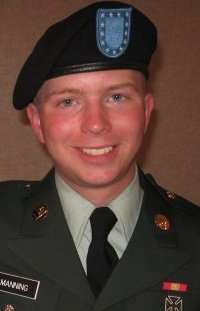 A recent article by Steve Fishman in New York Magazine trots out more salacious gossip about Bradley Manning's sexuality, in what is now a sustained media campaign to discredit the military whistleblower. On foot of the Fishman article, WL Central examines the more insidious aspects of this trend.
Bradley Manning's sexuality is irrelevant. For anyone who has read the logs purporting to document his confession, his professed motives were plain. If he is guilty of blowing the whistle, he clearly blew the whistle on conscientious grounds. His sexual identity is irrelevant to this. If he did not blow the whistle, his sexuality is equally irrelevant.
His sexuality is irrelevant, but what is becoming relevant is how assiduously the press have focused on it. The issue has become seperate from the story of Manning's alleged involvement with Wikileaks. Since Ginger Thomson's Bradley Manning piece in August last year, mainstream media coverage of the issue has created and reinforced an alternative history of the Manning case, wherein his actions were the pathological outcome of a deeply psychologically troubled individual, recklessly breaking protocol in a fit of indulgent self-realization.
This Saturday, July 2, Democracy Now's Amy Goodman will moderate a conversation with Julian Assange and Slovenian philosopher, Slavoj Žižek. The event is sponsored by the Frontline Club, and broadcast from The Troxy theater in London.
The focus of the event will be the "ethics and philosophy behind WikiLeaks’ work, the talk will provide a rare opportunity to hear two of the world’s most prominent thinkers discuss some of the most pressing issues of our time," according to the Democracy Now web site.
The conversation coincides with the "publication of the paperback edition of Žižek’s Living in the End Times, in which he argues that new ways of using and sharing information, in particular WikiLeaks, are one of a number of harbingers of the end of global capitalism as we know it."
Starts below at 21 minutes.

(photo: David King)
Public workers, up to seven hundred and fifty thousand teachers and civil servants, are alleged to have participated in a June 30 general strike called for in the United Kingdom after UK Parliament passed changes to pensions and retirement, specifically, increasing the amount an employee has to contribute.
At 1:31 pm London Time, Hélène Mulholland reported from the end of “the Strand, by Trafalgar Square,” that a march had been “good-natured” so far. “ She said it is clear that the turn out has been good, that quite a few in the UK believe the government did not properly negotiate the new pension and retirement changes. And she also reported, “There doesn't seem to have been much trouble," except for the stopping and searching of minority students.
Around 12 pm London Time, she “walked past five police officers stopping and searching two non-white 17-year-old sixth formers, Aamir Kadir and Jean-Claude Goddard, in Lincoln's Inn Fields to the dismay of onlookers.” Mulholland said they were searched because they were wearing keffiyeh scarves, a traditional headdress for Arab men. While there were white women with scarves standing around the two young men who were stopped, the police said they stopped the two because the scarves might be used to commit violence. They said they were stopped out of “empirical judgment” because “people use keffiyehs to mask their identity.”
Throughout the strikes today, the UK police have claimed stop and search powers under section 60 of the Criminal Public Order Act. Here is how this provision allowing police the legal right to stop citizens and search them in public is described on the Metropolitan Police website:
Section 60 Criminal Justice and Public Order Act 1994, gives police the right to search people in a defined area at a specific time when they believe, with good reason, that: there is the possibility of serious violence; or that a person is carrying a dangerous object or offensive weapon; or that an incident involving serious violence has taken place and a dangerous instrument or offensive weapon used in the incident is being carried in the locality. This law has to be authorized by a senior officer and is used mainly to tackle football hooliganism and gang fights.
In this case, the police are using Section 60 to thwart the “hooliganism” of public and civil servants who feel they just got a bad deal from their government, who are upset they might have more trouble making ends meet for their family.
 FROM THE CABLES/GITMO FILES
Dominique Strauss-Kahn may be just one of many diplomats or international officials alleged to have abused maids or nannies in the United States:
In April 2007, a Tanzanian maid filed a lawsuit against Alan Mzengi, a minister-counselor at the Tanzanian Embassy. She alleged the Mzengis kept her as “a virtual prisoner in their residence, stripping her of her passport, refusing to permit her to leave the house unaccompanied.” The lawsuit states she was not paid for her four years of work.
On this case, Reuters reports a US State Embassy cable from December 2009 shows the US government asked the Tanzanian government to investigate saying, “While payment of the lost wages to Ms. Mazengo is our first priority, we also hope that any diplomat who has treated his domestic staff in such an abusive manner would face appropriate sanction upon his return home," the cable said.
The State Department continues to monitor a possible Tanzania investigation and claims it will be getting “tough on alleged abuse of domestic workers by foreign diplomats.”
Cables deal with Canadian electricity:
One story out from CBC reports that Prince Edward Island utility Maritime Electric was part of Hydro-Québec's plans for purchase of NB Power. In October 2009, as the New Brunswick government was considering a $4.8 billion deal that was politically unpopular, the possibility of a sale was denied. The cables show it was seriously considered.
For the past four or five days, a copy of a leaked confidentiality agreement from WikiLeaks has been a hot topic among those who follow news and politics. Those that have regularly scrutinized WikiLeaks, who have typically gone along with any meme in the media that shines a light on the organization’s imperfections, took the posting of this agreement as an opportunity to focus on how this showed complete hypocrisy. Those sympathetic and supportive, on the other hand, saw this as a moment when they needed to get out in front and defend the organization.
I was one of those people who found the renewed push to further de-legitimize WikiLeaks concerning. I posted an analysis of the confidentiality agreement and later posted a comprehensive and thought-out critique of David Allen Green's work on WikiLeaks. (Green is the blogger for the New Statesman, who helped make the agreement a big story.)
As the story was breaking, I received a Twitter message, “WikiLeaks Threatens Its Own Leakers With $20 Million Penalty" http://bit.ly/klgAnz What says @kgosztola?” The message came from Roni Weiss, a personality on a podcast show called “Don’t Worry About the Government.” I told him he should have me on his program to share my opinion.
On Facebook, we went back and forth on the “Don’t Worry About the Government” show page as I tried to get him to do a segment with me. He stated his position, “My biggest concern is that I just don't have much to say about it…My stance is basically: This looks bad for them, publicity-wise, and beyond that, I don't really care, because they do a lot of things that look bad.
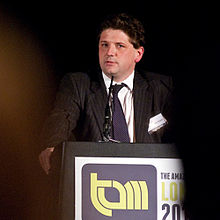 David Allen Green, legal correspondent for the New Statesman out of the UK, has spent the last few days calling attention to a leaked confidentiality or non-disclosure agreement (NDA), which he revealed in a blog post on May 11. Green has posted a second post on the agreement on his blog, Jack of Kent, and will be posting a summary to the New Statesman website on May 16, which last time I checked, he intends to glibly title, "NDAs for Dummies."
I published an initial analysis of the leaked agreement on WL Central. The analysis was featured as a “Best Opinion” in an “Irony Alert” blog post on the agreement on The Week’s website.
Green, who is the blogger who was the first to draw attention to the agreement, called it a “draconian and extraordinary legal gag that WikiLeaks imposes on its own staff” and, in particular, focused on Clause 5 of the agreement that “imposes a penalty of ‘£12,000,000 – twelve million pounds sterling’ on anyone who breaches this legal gag.”
In his follow-up post, which cites the analysis I wrote, he groups me with others who “sought to explain the document away: to normalize it and to contend that it is somehow unexceptional.” That is true. That is what I did.
He adds:
It may be well that for WikiLeaks partisans (like "the Birthers" in the United States), nothing - not even a disclosed document- will shift their adherence to their cause.
Julian Assange Says Whistleblowers “Heroes,” WikiLeaks Played “Significant Role” in Recent Arab Uprisings As He Accepts Sydney Peace Prize
Julian Assange, founder of WikiLeaks, was awarded the Sydney Peace Model at the Frontline Club in London. The award was given to recognize his work for “greater transparency and accountability of governments.” @Asher_Wolf covered the event on Twitter.
Assange said, “WikiLeaks is the most scrutinized organization per capita in the world,” and that he was in “the absurd situation of receiving the Sydney Peace Prize in London whilst wearing a surveillance device” around his ankle. He noted that the submission site for WikiLeaks is being re-engineered as a result of “sabotage and website attacks.” Also, Assange acknowledged that coverage of releases from WikiLeaks could devolve into newspapers attacking each other.
Below is video of Assange accepting the medal:
As WL Central reported on Tuesday, in an adjournment debate in the UK House of Commons on Monday evening, Henry Bellingham, parliamentary undersecretary at the Foreign and Commonwealth Office, confirmed that Bradley Manning acquired British citizenship at birth.
The video of the debate is now available here.
The opening argument of MP Ann Clwyd (Labour - Cynon Valley) is notable for emphasizing that Bradley Manning's citizenship is not the sole reason a government of laws should be concerned about his treatment. She had earlier raised the interpretation of the British Nationality Act with the foreign minister in committee and in the Commons, but in this address, she reminds the government of its commitment to speak out against human-rights abuses everywhere, regardless of the victim's nationality. She also asks for assurances that Manning's British family will receive UK consular assistance in their future attempts to visit him at the US Marine base at Quantico, Virginia.
Bellingham responds affirmatively on all three counts -- on the strict interpretation of the Nationality Act (with qualifications based on Manning's right to privacy), on the commitment of the UK government to make formal representations to other nations concerning human-rights abuses, and on the willingness of the government to assist Manning's family in their attempts to visit him.
Previous WL Central coverage of Bradley Manning
WL Central action page for Bradley Manning
The BBC first announced this morning that the High Court of England and Wales* has listed court dates of 12-13 July to hear Julian Assange's appeal against extradition from the UK to Sweden.
BBC reporter Dominic Hurst tweeted shortly after his first announcement that "Assange's appeal is against Judge Riddle's ruling that extradition to Sweden wouldn't breach his human rights," a summary repeated in this report from the Guardian.
Mark Stephens @markslarks, Assange's UK solicitor, then replied to a first question on Twitter from a WLC reporter: "dates correct. Detail wrong." When questioned further by another WLC reporter hoping for a lawyerly update, he tweeted: "will come when I return to the UK."
There is obviously some time for precising our understanding of what the appeal may entail. Parliamentary review of the European Arrest Warrant (EAW) is also expected in June [citation needed and welcomed].
* NB: Scotland's legal system has always been independent from that of England and Wales.
 At the end of today's sitting, the UK Parliament at Westminster will debate the treatment of Bradley Manning, a debate that will be opened by Ann Clwyd (Labour-Cynon Valley).
Clwyd has raised Manning's plight and the concern for him of her constituents in Wales before in committee and in the Commons, and has received considered and relatively positive responses from both the foreign secretary and the leader in the Commons, as we reported here. Manning's mother is a Welsh citizen of the UK.
No time is given for the start of the debate. It is scheduled to go on until 10:30 pm or for half an hour, whichever is later.
Via @GregMitch on Twitter.
UK MP quizzes Crown Prosecution Service over Assange extradition case
Liberal Democrat MP Julian Huppert has raised the relevance of the Human Rights Act to the role played by the UK Crown Prosecution Service (CPS) in Sweden's attempt to extradite Julian Assange.
In reply to Mr Huppert's questions during a joint committee hearing on human rights, Keir Starmer, director of Public Prosecutions, admitted that the CPS "are bound by the Human Rights Act, and we are bound by our duties to the court." However, he added that human-rights issues would be for the courts to determine rather than for the CPS.
Impenetrable though those legal distinctions may appear in the abstract, parliamentary attention to possible politicization of law is significant where it appears that the boundaries between law and politics are not clear and stable.
Australian MP and shadow minister reflects on WikiLeaks, Spycatcher, and freedom of the press
Malcolm Turnbull (L-Wentworth), former leader of the Opposition in the Australian House of Representatives and the current shadow minister for Communications and Broadband, spoke to Sydney University Law School on 31 March about his experiences representing former MI5 officer Peter Wright, author of Spycatcher, and about the concerns and responsibilities the Australian government faces relative to Assange's own situation and to WikiLeaks publications generally.
The London demonstrations yesterday, where a reported 500,000 people took to the streets to protest the austerity cuts, will not change government strategy according to Liberal democrat minister Vince Cable. "No government - coalition, Labour or any other - would change its fundamental economic policy simply in response to a demonstration of that kind," he said.
Police arrested 201 people and charged 149 according to the BBC. Police reported that 145 of the arrests were in connection with the group UK Uncut, which occupied luxury grocery store Fortnum & Mason in Piccadilly in protest over alleged tax avoidance by the business's part owners. BBC is reporting 84 injuries, including at least 31 police, with 11 officers requiring hospital treatment.
Debate: This House believes whistleblowers make the world a safer place
On 9 April, the Frontline Club and the New Statesman will host a public debate in which Julian Assange will speak for the proposition "This House believes whistleblowers make the world a safer place."
The debate will be chaired by Jason Cowley, editor of the New Statesman; other panelists have yet to be announced. The event will be held at Kensington Town Hall at 5 pm GMT; it is already fully booked but should be both livetweeted and filmed.
Rob Stary, Australian lawyer for Julian Assange and WikiLeaks: interview
Last week the WikiLeaks Australian Citizens Alliance (WACA) posted the video of an interview they did with Rob Stary, Julian Assange's lawyer in Australia, before the WikiLeaks Free Speech Forum in Melbourne on 4 February.
Some of the interview focuses on legal and political issues particular to Australia. More generally, however, Stary challenges the claims of a number of governments that their legal manoeuvres against Assange and/or WikiLeaks are unaffected by politics. His analysis of the international interplay between law and politics is a fine summary of the state of play so far.
Call to Action in support of Julian Assange / WikiLeaks in Monday's London Extradition Hearing
Auto-emailing United Kingdom media, their Embassy and Consulates in support of Julian in his extradition hearing. There are 5 individual identical emails each with 25 addresses. PLEASE sign all 5. Click here to go there.
 Next: We got Obasanjo to anoint Yar'Adua, says Saraki
"Contrary to the belief that former President Olusegun Obasanjo personally hand-picked late President Umaru Yar'Adua as his successor, a United States diplomatic cable obtained by Wikileaks and made available exclusively to NEXT, has detailed how a group of governors led by Bukola Saraki, the Kwara State governor, worked behind the scene to pressure Mr. Obasanjo into anointing the former Katsina State governor as his replacement.
No other person than Mr. Saraki himself gave the account of the political intrigues that threw up the late president to a former US Consul General, Brian Browne."
Aftenposten: MP CRITICIZES JAPANESE NUCLEAR PLANS
"Lower House Diet Member Taro Kono voiced his strong opposition to the nuclear industry in Japan, especially nuclear reprocessing, based on issues of cost, safety, and security during a dinner with a visiting staffdel, Energy Attache and Economic Officer October 21. Kono also criticized the Japanese bureaucracy and power companies for continuing an outdated nuclear energy strategy, suppressing development of alternative energy, and keeping information from Diet members and the public. He also expressed dissatisfaction with the current election campaign law."
Aftenposten: CLIMATE CHANGE: EMISSION IMPOSSIBLE: NPP SHUTDOWN EXACERBATES JAPAN´S KYOTO TARGET BIND
 Next: Yar’Adua asked Ibori to turn himself in, says Saraki
"Disturbed by the waning bilateral relations between Nigeria and the US government over the perceived lack of vigour in the anti-corruption fight, late President Umaru Yar’Adua asked James Ibori, the corrupt former governor of Delta State, to turn himself in to the British Metropolitan Police.
According to a U.S. diplomatic cable, made available to NEXT, Bukola Saraki, Kwara State governor, a close friend of Mr. Ibori and confidant of Mr. Yar’Adua, said this in a chat with former US ambassador to Nigeria, Robin Sanders."
Next: ‘We blocked Obasanjo, Babangida’s candidates for PDP chair’
"The emergence of Vincent Ogbulafor as National Chairman of the People’s Democratic Party (PDP) in 2008 was a result of deft political manoeuvring and intense power play among three former Nigerian presidents which saw the camp of late President Umaru Yar’Adua triumphing, according to a leaked U.S. diplomatic cable made available to NEXT.
Bukola Saraki, the Kwara State governor, told former U.S ambassador, Robin Sanders, during a meeting on September 22, 2008 that he used his powerful position as the Chairman of the Nigeria Governors’ Forum to help Mr. Yar’Adua’s anointed candidate emerge victorious."
The Telegraph: US feared British 'sharia banks' would finance terrorist groups
"Britain's enthusiastic support for "sharia banking" raised concerns in Washington that the City of London could become a centre of terrorist funding, leaked documents show.
Financial reforms pushed through by the Labour government allowed Islamic banks to flourish in Britain, amassing assets valued at more than £12 billion."
The Telegraph: US feared British 'sharia banks' would finance terrorist groups
"Japan was warned more than two years ago by the international nuclear watchdog that its nuclear power plants were not capable of withstanding powerful earthquakes, leaked diplomatic cables reveal.
An official from the International Atomic Energy Agency (IAEA) said in December 2008 that safety rules were out of date and strong earthquakes would pose a "serious problem" for nuclear power stations."
La Jornada: EU rechaza que Josefina Reyes haya sido asesinada debido a su activismo (EU rejects that Josefina Reyes has been killed because of her activism)
"Señala en un cable que el homicidio es producto de "sus vínculos" con delincuentes. (It is pointed out in a cable that the murder is product of "ties" with criminals.)"
Read more (Spanish) Google Translate
La Jornada: Por "insistencia" de EU se relegó al Ejército de la lucha antinarco en Juárez (By "insistence" of EU was relegated the fighting anti-narco army in Juárez)
"Cables revelan la "colaboración" estadunidense para dejar al frente a la PF. (Cables reveal U.S. "collaboration" to give control to the Federal Police.)"
Read more (Spanish) Google Translate
La Jornada: PGR y SG pidieron ayuda a EU para enfocar la lucha en dos ciudades (SG [Secretary of Government] and PGR [General Police of the Republic] sought for help from U.S. to focus on the struggle of two cities)
"Calderón "se juega su reputación" en el combate al crimen organizado, afirmaron". (Calderón "is staking its reputation" in the fight against organized crime, they said.)
Read more (Spanish) Google Translate
El País: EE UU cree que Lugo carece de apoyos para gobernar Paraguay (The United States believes that Lugo lacks support to govern Paraguay)
"El presidente de Paraguay, Fernando Lugo, comenzó a gobernar en el año 2008 con serias turbulencias y maniobras desestabilizadoras de la oposición, que a los pocos meses de la investidura imputó al exobispo impericia, favoritismo, la promoción de la lucha de clases y le culpó por la inseguridad ciudadana y el estancamiento político. (The president of Paraguay, Fernando Lugo, began to rule in 2008 with serious disturbances and destabilizing maneuvers of the opposition, which a few months after the inauguration accused the ex-bishop of incompetence, favoritism, the promotion of fights between classes and blamed him about the insecurity and political stalemate.)"
Read more (Spanish) Google Translate
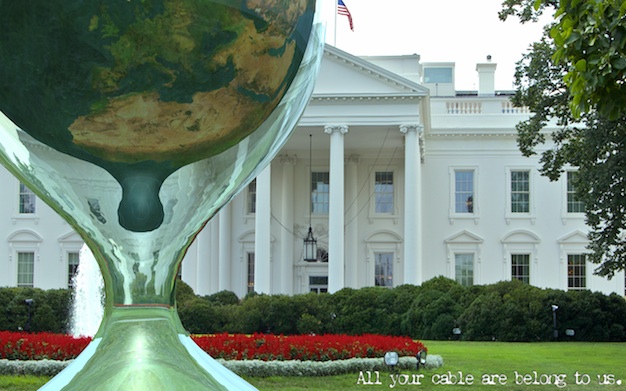
(Image Credit: Dali Rău)

This work is licensed under a Creative Commons Attribution-NonCommercial-NoDerivs 3.0 Unported License.
Theme by Danetsoft and Danang Probo Sayekti inspired by Maksimer

