The riots spreading through London are a terrifying reminder of what lies ahead as the austerity-obsessed West nosedives into economic collapse.
The markets plummet and London burns. Whatever your political inclinations may be, there’s no denying the apocalyptic quality to the headlines coming out of Europe’s largest city right now. What we are witnessing is financial meltdown and social meltdown in tandem. And, while there is no direct causal relationship between the two historical moments, there’s a connecting theme that unites them in a complex dialectic of collapse.
So this is what things have come to: a societal tragedy of unfathomable proportions. What the UK is experiencing right now is the total breakdown of social cohesion into utter lawlessness and indiscriminate violence. On the third consecutive day of unrest, rioting and looting spread throughout the capital and — for the first time — to other UK cities as well. And while I hate to be gloomy, I have to remind you once again that this is only just the beginning.
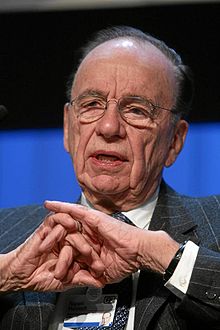 The Wall Street Journal - a News Corporation outlet - is again engaging in aggressive damage control for the Murdoch empire by attacking Wikileaks. WL Central addresses the mendacity.
It appears that the Wall Street Journal - which publishes from News Corp's Celanese Building headquarters in New York city - is suing for the title of "Murdoch's Bulldog." Thinly veiled and deceptive attempts to control the message on the escalating News of the World scandal have been issuing from the once-respected news outlet. And the tactic seems to be diversionary. The second article in two days to defend News Corp by attacking Wikileaks was published today, penned by Bret Stephens.
Trevor Timm has already written here at WL Central about yesterday's clumsy WSJ editorial, which alleged hypocrisy at the Guardian, in that it criticized News of the World while publishing material from Wikileaks. Today's article belaboured the same spurious argument even further, as the air of desperation at News Corp intensified in advance of the Murdoch hearing today. Keen to deny his motives preemptively, Stephens notes:
It's probably inevitable that this column will be read in some quarters as shilling for Rupert Murdoch. Not at all: I have nothing but contempt for the hack journalism practiced by some of the Murdoch titles.
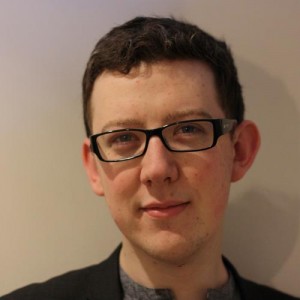 A new article by the Guardian's James Ball fleshes out David Leigh's allegation that Wikileaks is to blame for the arrest of Bradley Manning.
Last week's release of the unredacted Lamo-Manning chat logs contained more information on the means by which Bradley Manning is alleged to have leaked information to Wikileaks. For a year now, Julian Assange has insisted that he can neither confirm nor deny whether Bradley Manning is the source for the leaks, since - as a matter of policy - the identity of the source is not known to Wikileaks. Wikileaks protects its sources by keeping them anonymous through cryptography and a secure submission system. Even if pressured to reveal their sources by court order - so goes the reasoning - Wikileaks will be unable to do so.
The original redacted chat logs contained no information which contradicted this, but they did contain various passages which appeared to make the story less likely. In particular, Manning is said in the logs to have claimed to have "developed a relationship" with Assange. The unredacted logs, however, give a more complete picture, and appear to confirm that Assange was speaking truthfully. If they are genuine - which is not assured - the chatlogs relate how Assange, in what appear to have been anonymous communications, insisted on knowing as little as possible about Manning.
(02:56:46 PM) bradass87: he knows very little about me
(02:56:54 PM) bradass87: he takes source protection uber-seriously
(02:57:01 PM) bradass87: “lie to me” he says
(02:57:06 PM) info@adrianlamo.com: Really. Interesting.
 A whirlwind of change in the way people communicate is sweeping the world. The spread of social media, blogs and online alternative media is rapidly changing how people are informed about current events. More are turning away from newspapers and TV, which have over the last few decades become monopolized by large corporations. Along with the spread of the Internet, WikiLeaks and their release of secret government documents has changed the landscape of the media. As Greg Mitchell's recent book title states, we are now in The Age of WikiLeaks.
There is much controversy over the future of journalism. The discourse surrounding WikiLeaks in its relation to traditional media has become the eye of the storm. Both the New York Times and The Guardian have come out strongly critical of WikiLeaks and Julian Assange. Bill Keller, executive editor of the New York Times has refused to refer to Assange as a journalist. In an interview on PBS, Keller described Assange as an activist with an agenda to promote, carrying an ideology of transparency, claiming that his aim is to embarrass the US government. Recently, Keller's view on this topic has shifted a bit. He came close to admitting WikiLeaks is a journalistic entity. Yet, he distanced himself from the non-profit whistle-blower site, saying "it still wasn't 'my kind of news organization,' and that if Assange was acting as a journalist, 'I don't regard him as a kindred spirit - he's not the kind of journalist I am'" (as cited in Ingram, 2011).

ATHENS - It was at night, and I asked my friend if it was dangerous to head there at that time. Police lines, with buses, were blocking the streets around the Square: "Can we really go there?". In front of Parliament, a crowd was shouting and pointing toward the building. I asked what they were saying and what was the meaning of the banners. "They're insulting the politicians". "The ass-holes will die", says that flag, the other one says "no more exploitation".
Climbing down the starts in front of the Parliament, I started to see tents, stands and a big crowd, where around a thousand people stood in a circle hearing someone speaking into a microphone. The sound came from improvised speakers hanging on the very lamp-posts of the square. The person speaking left while leaving the crowd clapping enthusiastically while another person took his post. I finally realized that I was in Syntagma.
We've learned a few important things from the full transcripts of Bradley Manning's online chats with Adrian Lamo. Glenn Greenwald has already focussed on how Wired magazine's decision to with-hold the full transcripts has damaged the reputations of Manning, Assange and WikiLeaks. But it's worth examining in more detail exactly how Wired's subterfuge has affected Julian Assange and WikiLeaks in particular.
Firstly, and most importantly, it's now clear that Julian Assange did NOT know if Bradley Manning was the source who leaked the US cables to WikiLeaks. Manning tells Lamo that Assange “knows little about me” and “he takes source-protections uber-seriously.” Furthermore, he says, Assange "won’t work with you if you reveal too much about yourself.” Assange even instructs Manning to lie about his identity!
This blows apart the US government's protracted efforts to suggest that Assange actively enticed Manning to hand over the cables, and thereby charge the Australian with criminal activity. In fact, it was only through his own protracted sleuth work that Manning even knew who HE was talking to: "it took me four months to confirm that the person i was communicating [with] was in fact assange".
Why would Wired with-hold this critically important information, unless they were actively co-operating with US agents trying to fabricate charges against Assange? Given that Lamo had notified authorities of Manning's alleged actions while still continuing to chat with him, it's logical to assume the Feds would have wanted to censor any published details. Wired appears to have willingly complied.
Next time you see a negative media report on Julian Assange or Wikileaks, have a think about who is writing it, and why. Behind every character-assassinating "newsy" hit-piece you will discover a writer or a publisher (usually both) with an agenda. And you don't have to look too far to find it.
I was reminded of this after I complained about a particularly nasty article on a Hollywood news site. The author couldn't seem to distinguish Wikileaks' legal activities from illegal hacking by groups like Anonymous and LulzSec. Worse yet, he insisted that Assange and all these hackers were terrorists on a par with Al Qaeda and deserved to be punished accordingly. A little investigation revealed that the writer was heavily involved in the Blu Ray DVD industry - to him, and to Hollywood in general, pirate hackers represent a serious threat to profitability. What's Wikileaks got to do with that? Well, who cares? Just get your hands off our Intellectual Property!
You might expect a more level-headed approach from former Australian foreign minister Gareth Evans, a last-minute replacement on a recent Wikileaks public forum. Evans said he was against attempts to “persecute or prosecute” Assange, but nevertheless labelled him an “anarchically-minded autocrat”. He calmly argued that leaks of secret government information “won’t contribute to better government” but would “inhibit internal communication within government” and lead to worse government decision-making.
Evans then wrote an article expounding his views in more detail. He neatly categorised leaks into three categories. While conceding that some leaks genuinely serve the public interest (never mind how or by whom that is defined), he warned that "some leaks are indefensible".
Ahmed went missing in Tripoli near the very beginning of the uprising. His family now believes that he was arrested on February 22 and taken to the notorious Adu Salim prison with many others. At the time they assumed he had been shot dead and disappeared by soldiers, mercenaries or one of Qaddafi's security services, like so many others.
So when a member of one Qaddafi's revolutionary committees told Ahmed's father, "We have your son, he is being held at Abu Salim prison. If your family does not come out to demonstrate on Friday you will never see your son again.", they paid him no never-mind and an extended clan of around 50 adult males and family refused to attend the rally. A few hours after the rally Ahmed's still warm body was dumped outside the family home with two bullets in his head.
Many other families received similar threats. "We did not think it was possible that he (Ahmed) was still alive, we thought the guy was just making threats," said Mohammed, Ahmed's uncle who was interview by AFP.
1. ] Whatever his revolutionary pretensions were in the past, in the last eight years Mummar Qaddafi has become a compliant, if somewhat unorthodox, third world ruler in the world imperialist system. The changes in the stance of his regime since 2004 are unmistakable. His rapprochement with the EU and even the US after Bush sent Biden to Tripoli on Air Force Two has been well documented elsewhere, as has been his association with Richard Perle and Goldman Sachs. He has joined the IMF, allowed western oil companies to directly exploit Libyan fields and privatized hundreds of key public enterprises. In spite of all the drama of the past, it should be clear to all that the Mummar Qaddafi of 2011 is one that has made his peace with the imperialists and they with him. Contrary to what the Qaddafi supporters would have you believe, there has not been a continuous momentum for imperialist regime change in Libya for the past 40 years.
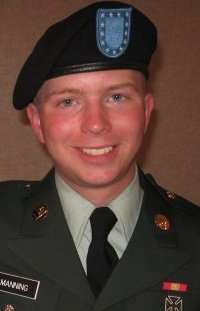 A recent article by Steve Fishman in New York Magazine trots out more salacious gossip about Bradley Manning's sexuality, in what is now a sustained media campaign to discredit the military whistleblower. On foot of the Fishman article, WL Central examines the more insidious aspects of this trend.
Bradley Manning's sexuality is irrelevant. For anyone who has read the logs purporting to document his confession, his professed motives were plain. If he is guilty of blowing the whistle, he clearly blew the whistle on conscientious grounds. His sexual identity is irrelevant to this. If he did not blow the whistle, his sexuality is equally irrelevant.
His sexuality is irrelevant, but what is becoming relevant is how assiduously the press have focused on it. The issue has become seperate from the story of Manning's alleged involvement with Wikileaks. Since Ginger Thomson's Bradley Manning piece in August last year, mainstream media coverage of the issue has created and reinforced an alternative history of the Manning case, wherein his actions were the pathological outcome of a deeply psychologically troubled individual, recklessly breaking protocol in a fit of indulgent self-realization.
 Those who read President Barack Obama’s speech will likely be reading to find hints of when the conflict might finally come to an end. Support for a pullout from Afghanistan is at an all-time high, according to a recent Pew Research Center poll. But, there is little reason to put much stock in the fact that ten thousand troops will be leaving Afghanistan this summer. Withdrawing a number of troops around July of 2011 was always part of a plan, a way of deftly managing public opinion.
When Obama went ahead and added thirty thousand troops, he knew, as shown in Bob Woodward’s book Obama’s Wars he had two years with the public. He understood the perils of escalating a war, as retired Lt. Gen. Karl W. Eikenberry, retired Gen. James L. Jones and Lt. Gen. Douglas Lute all offered a level of dissent against Admiral Mike Mullen, Gen. David Petraeus and Defense Secretary Robert M. Gates. And, Obama allegedly told Vice President Joe Biden in private to oppose a big troop buildup but could not stand up to military brass. In the end, though, he was able to set a withdrawal timetable of ending the war by 2014.
Former congresswomen and Green Party presidential candidate has just returned from a fact finding mission to Libya. While there she talked [YouTube 03:31] with a Qaddafi supporter in the hospital after being injured by US/NATO bombing. He said "People in Germany have Hitler. People in Italy have Mussolini. It does not matter if they are good or not; they have [a] hero. Why [not] let us have [a] hero? We like him [Qaddafi]." McKinney responded "yeah, right."
The ANSWER Coalition sponsored nationwide speaking tour of Cynthia McKinney: Eyewitness Libya started in Los Angeles on Saturday, 18 June 2011. This was at the Immanuel Presbyterian Church on Wilshire where many progressive events take place. Almost two hundred people showed up. Among them was a group of about two dozen Libyans and Libyan-Americans, some of which clearly associated themselves with the Free Libya movement, the tricolor flag of the Libyan opposition was much in evidence not only as flags but as hats, scarfs and jackets. All these Libyans were clearly anti-Qaddafi.
What is going on in Athens at the moment is resistance against an invasion — and this invasion is being justified with the extensive use of mythology.
By Alex Andreou, originally published on SturdyBlog
I have never been more desperate to explain and more hopeful for your understanding of any single fact than this: The protests in Greece concern all of you directly.
What is going on in Athens at the moment is resistance against an invasion; an invasion as brutal as that against Poland in 1939. The invading army wears suits instead of uniforms and holds laptops instead of guns, but make no mistake – the attack on our sovereignty is as violent and thorough. Private wealth interests are dictating policy to a sovereign nation, which is expressly and directly against its national interest. Ignore it at your peril. Say to yourselves, if you wish, that perhaps it will stop there. That perhaps the bailiffs will not go after the Portugal and Ireland next. And then Spain and the UK. But it is already beginning to happen. This is why you cannot afford to ignore these events.
 Closely following the character of Julian Assange, founder of the pro-transparency media organization WikiLeaks, the recently aired CNN documentary, “WikiWars,” provides a presentation of the story of the organization with a prime focus on Assange’s character. It is another opportunity, like PBS’ Frontline documentary “WikiSecrets,” for a wide audience in the United States to get a better grasp of the nature of the organization.
That, perhaps, is what makes discussing this documentary important. There is no new information in this documentary, but, packaged together, the documentary uses Assange as a vector for communicating the idiosyncrasies of WikiLeaks to an audience. Whether legitimately done or not, viewers are able to hear Assange in footage obtained by the producers and also hear a handful of people, who have worked with Assange, discuss what he is like.
The documentary can be broken into the following parts: an introduction into the behavior and motivations of Assange, the founding of WikiLeaks (which highlights the work that impacted Kenya and Iceland), the release of the “Collateral Murder” video, the release of the Afghan War Logs that involved collaborating with the New York Times, The Guardian and Der Spiegel, the accusations of sexual assault that now find him under house arrest in the UK and the rise of a secret global force of cyber hacktivists known as Anonymous that have launched DDoS attacks in defense of WikiLeaks.
Larsen frames the story in the opening scene like this:
 The past twenty four hours saw some big stories related to WikiLeaks break.
-The Grand Jury investigation into WikiLeaks widened as news subpoenas were issued to individuals like David House, co-founder of the Bradley Manning Support Network.
-The US government's case against Thomas Drake totally imploded. He accepted a misdemeanor plea deal and will likely serve no jail time primarily because the government did not want to make its case against Drake with information on classified technology.
-Andy Greenberg of Forbes.com reported on an ACLU lawsuit against the government for not complying with FOIA requests for specific US State Embassy cables
I had Trevor Timm, the person behind the @WLLegal Twitter account, record a podcast to talk about these recent WikiLeaks-related stories.
To listen, click play on the embedded player below (Or, go here to listen and download.)
 As it becomes more and more clear the United States government is accelerating efforts to establish a policy and improve the government's ability to respond to cyber attacks, the openness and freedom of the Internet is more and more at stake. Also, specific to an organization like WikiLeaks, the government may be on its way to crafting legal authority to take WikiLeaks out with DDoS or DNS attacks. (Of course, many already believe the US was behind the attack on the WikiLeaks website that took place just as WikiLeaks was beginning to release the US State Embassy cables.)
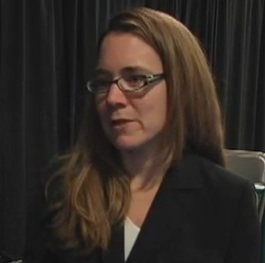 Marcy Wheeler, guest on the podcast this week, gets into this saying, "If you agree that bringing down speech is a legitimate cyber warfare tactic and if you agree that WikiLeaks was an attack on defense infrastructure or maybe State Department infrastructure, then you can easily get to the justification of okay we can do a DDOS attack on WikiLeaks," and finds the US government may be working to create legal justification for such attacks.
Wheeler blogs at Firedoglake as Emptywheel. She primarily covers the national security establishment in the United States and has written many blog posts on WikiLeaks, Bradley Manning and cyber security, with her most recent post on all of this being, "The Cyberwar Campaign against Jihadi Literature and WikiLeaks."
 Dueling resolutions from Republican Speaker of the House John Boehner and Democratic House Representative Dennis Kucinich sparked a debate in Congress. The debate centered around the War Powers Act, the US Constitution and whether President Obama had violated the law by taking the United States into a war in Libya.
The Kucinich Resolution (H.R. Con. Res. 251) aimed to direct the president, pursuant to the War Powers Act, to remove all troops from Libya within fifteen days after the resolution was adopted. It was an attempt to force Congress to exercise the authority that it has under the Constitution to decide when and where troops are deployed for wars and whether or not wars should be launched.
In contrast, the Boehner Resolution (H.R. Con. Res. 292) was offered by Speaker Boehner to take the wind out of the sails of the growing bipartisan movement, consisting of anti-war Democrats and anti-interventionist Republicans, who were ready to assert Congress’ legislative authority and oppose the further expansion of the Executive by the Obama Administration that has taken place as a result of the Libya War.
The resolution brought by Rep. Kucinich failed 148-265. Speaker Boehner’s resolution passed 268-145.
Wikileaks Australian Citizens Alliance has kindly allowed us to share this series of videos, a conversation between myself, Sam and Kaz.
There was some difficulty with the software not behaving itself and the audio on my side was a bit patchy. We'll be working on future conversations where hopefully the use of Skype and glitches will be improved.
Part 1
Part 2
Part 3
WACA's Youtube user site here, with more videos well worth having a look.
http://www.youtube.com/user/akaWACA
As an Australian citizen I must say it is most pleasing that others like Sam and Kaz at WACA in Australia are so motivated to become involved online and elsewhere to carry a torch for human rights and Wikileaks. There are so many people around the world on the same page with us here at WLC.
Well done Sam and Kaz!

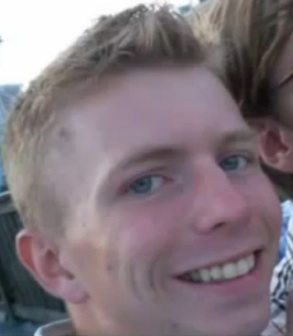 A student at the Medill School of Journalism at Northwestern University in Chicago was gracious enough to invite me to speak on a panel on Bradley Manning, the alleged whistleblower to WikiLeaks, which he had to put together for his “Media, Ethics and the Law” class. I participated in the panel this morning.
In addition to myself, the student informed me Timothy McNulty, a foreign editor for the Chicago Tribune who covered the Iraq invasion and the Afghanistan War, and Paul Rosenzweig, Carnegie Visiting Fellow and former Department of Homeland Security official, would be participating. A couple of student journalists would speak during the panel as well.
McNulty and Rosenzweig were both present in the classroom where the panel was held. I was in The Nation Magazine office in Manhattan, New York.
The student who organized the panel had me call in and put me on speakerphone. I was able to listen to what McNulty and Rosenzweig were saying.
Rosenzweig began the panel saying with assurance there isn’t any doubt the material WikiLeaks has released has caused risks. He said lists have been created of people who were listed in the documents—lists featuring the names of informants—and the Taliban has been hunting these people down.
Rosenzweig cited a Zimbabwe opposition leader who many believe to be endangered as another example of the risks WikiLeaks’ releases have created. He said there are good laws on secrecy, files released contained information on whereabouts of Osama bin Laden, and he has no problem with Manning being prosecuted.
McNulty agreed. And I was greatly disturbed by the falsehoods that McNulty let stand and made certain that I was able to comment.
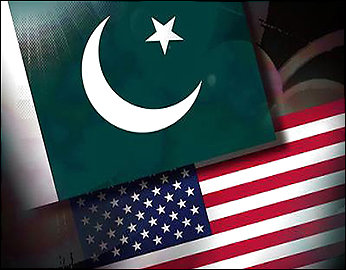 The Dawn Media Group in partnership with WikiLeaks has been releasing the "Pakistan Papers." Thus far, some of the revelations include the following: US was concerned that Pakistan would oppose its policies at the United Nations; US was worried Pakistan would purchase oil from Iran, allowing them to get a foothold in Pakistan; Pakistan's government was upset with US funding for the Pakistan military, which led to increased civil-military tensions; Pakistan's military asked for continued drone coverage; the US has had troops deployed on Pakistan soil; Saudi Arabia and the UAE have been financing jihadist groups in Pakistan and the US did not provide Benazir Bhutto with proper security.
For this episode of "This Week in WikiLeaks," the show has part two of an interview that was done with Raza Rumi, a writer based in Lahore, Pakistan. Rumi regularly writes for the Pakistani weekly The Friday Times, The News and Daily DAWN on myriad topics such as history, arts, literature and society. Rumi has worked in Pakistan and abroad in various organizations including multilateral institutions such as the United Nations.
Rumi's writing can be read here.
[*Note: This is the second part of "This Week in WikiLeaks" for the week. You'll find part one, an interview with Kevin Zeese of the Bradley Manning Support Network on the one year anniversary of Manning's arrest here.]
To hear the show, click play on this embedded player.

This work is licensed under a Creative Commons Attribution-NonCommercial-NoDerivs 3.0 Unported License.
Theme by Danetsoft and Danang Probo Sayekti inspired by Maksimer

